
Keynotes
– ## Keynote #1: From Sharks to Survivors: AI and Drones for a Safer World *
– Associate Professor SHARMA Nabin
– UTS Intelligent Drone Lab, School of Computer Science, University of Technology Sydney (UTS),Australia *
– Abstract: Drones and artificial intelligence (AI) have revolutionized emergency response and marked the beginning of a new era of life-saving possibilities. Particularly, aerial search and rescue operations for post-disaster management, beach safety, shark detection, to mention a few. In this talk,
we will explore how cutting-edge technology is redefining coastal security and emergency response. From real-time beach monitoring and early hazard detection to predicting and mitigating shark encounters, as well as dramatically improving the speed and effectiveness of search and rescue missions. A framework for UAV-based search and rescue will be discussed, along with its successful application in real-world scenarios. In particular, SharkSpotter©, the world’s first non-destructive and non-invasive technology for detecting sharks and other potential threats, will be presented. The technology has been used to support lifeguards in challenging environments by providing real-time aerial surveillance, enhancing their capabilities, and enabling rapid responses to potential hazards. The talk will also provide a sneak peek into the next generation of SharkSpotter AI - SharkSpotter 2.0©. In addition, the talk will explore the use of drones and AI for aerial search and rescue and post-disaster management, including rapidly locating survivors and delivering essential supplies to remote or difficult-to-access areas. The Aerial Search and Rescue System (ASARS), developed through the Aus4Innovation program in partnership with UTS and LQDTU, will also be presented as a real-world example of how drones and AI can support search and rescue operations.
– 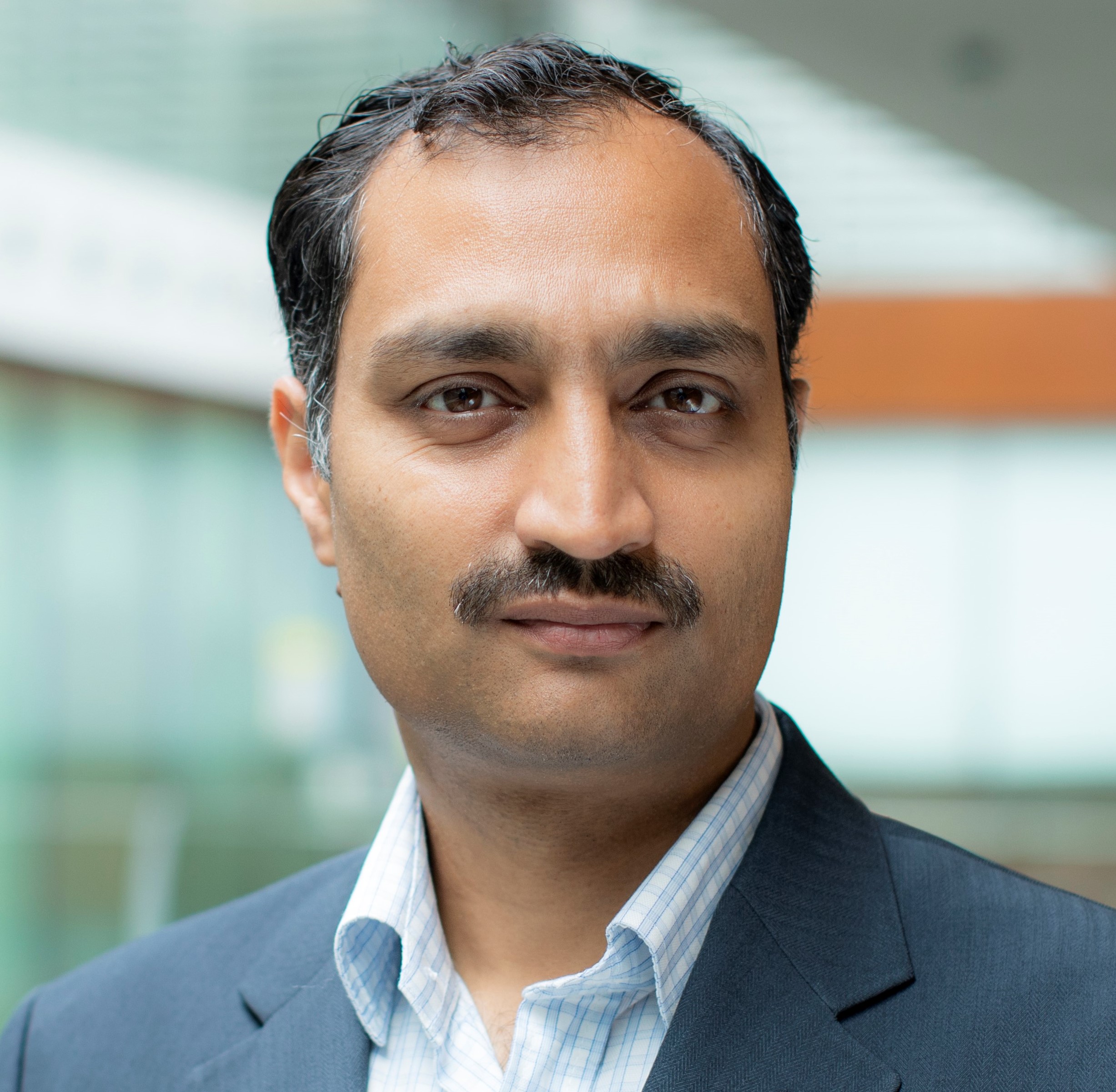 Biography: Dr. Nabin Sharma is an Associate Professor and Director of the UTS Intelligent Drone Lab, in the School of Computer Science, University of Technology Sydney (UTS). He is also the Co-director of the UTS-IITM Joint Research Center and the founding course director for the Master and Bachelor of Artificial Intelligence programs at UTS. His research area focuses on computer vision, aerial video and image processing, pattern recognition, deep learning techniques for object detection and recognition, and research translation. Dr. Nabin has more than 19+ years of experience in research & development and cademia and received funds exceeding AUD $1.75Million from research grants in collaboration with industry, academia and defense. He has substantial industry experience in software design and development while working on various projects at IBM India Private Ltd. He is the Chief-Investigator and technical lead for several AI-based award-winning industry funded projects at UTS.
Dr. Nabin received several awards at state, national and international level along with his team and industry partners for the research & development and innovative use of AI. Prestigious ones include - National iAwards 2018 by Australian Information Industry Association (AIIA) in the Artificial Intelligence or Machine Learning Innovation of the Year category, merit award at Asia Pacific ICT Alliance Awards (APICTA) 2018 in the Artificial Intelligence Technology of the year category, for the SharkSpotter© project. He served as an organising committee/program committee member for many conferences and serves as a reviewer for prestigious journals and conferences. He is a Senior Member of IEEE, a member of ACM, a member of Australian Water Association, a life-member of the Indian Unit for Pattern Recognition and Artificial Intelligence (IUPRAI) and a member of the Australia Computer Society (ACS).
– ## Keynote #2: Fundamental study on a risk assessment method of RC structures subjected to explosive loads *
– Professor BEPPU Masuhiro
– National Defense Academy of Japan, Japan*
– Abstract: This study proposes an evaluating method of the risk of RC structures suffered from explosive loads due to a terrorist’s bombing attack, an explosion in a chemical plant and so on. Firstly, a hazard curve that represents the relationship between explosive mass and frequency of the explosive incidents was evaluated based on statistics of terrorist’s bombings in the world. Secondly, in order to evaluate damage states of RC structures caused by the explosive loads, fragility curves of RC members, i.e. beam, column, and slab were evaluated by using a single degree of freedom model and rotational capacity based criterion. Herein, the fragility curve shows the relationship between probability of damage levels, such as “no damage”, “small damage”, “collapse”, and explosive mass. Total probability of failure of the RC structure was estimated by superposing the fragility curve of the members. A loss curve was calculated based on the damage states of the RC structure by assuming amount of loss of humans and the RC structure in each damage state. A risk curve was derived by combining the hazard curve with the loss curve.
– 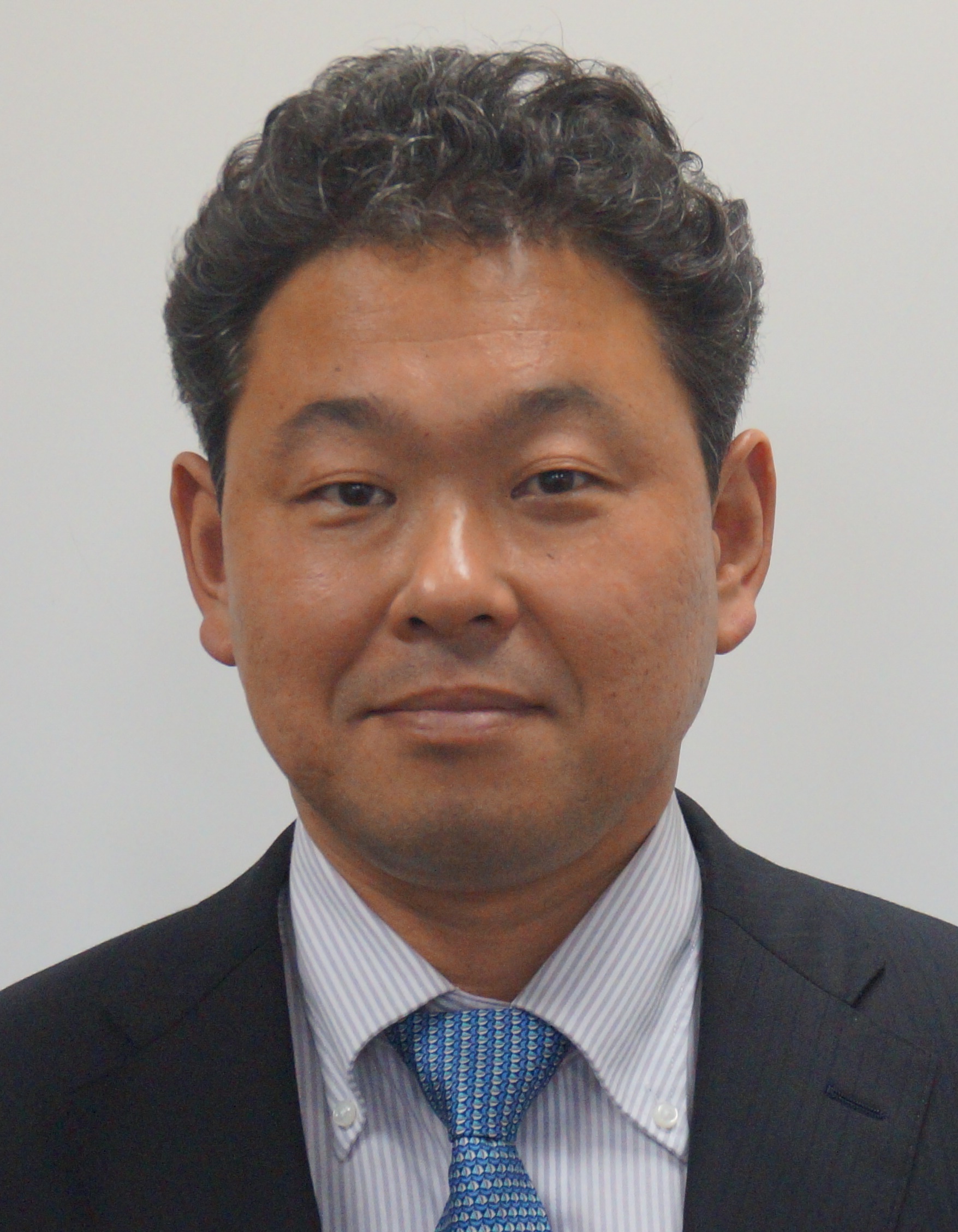 Biography: Prof. Masuhiro Beppu received BEng and Master degree from National Defense Academy of Japan, and PhD from Yamaguchi University, Japan. Prof. Beppu is currently working at Department of Civil and Environmental Engineering in the National Defense Academy of Japan His research interests are Protection of Structures against Natural and Manmade Dynamic Loads. Prof. Beppu has been working in the area of Blast and Impact Engineering. He has more than 250 technical publications including over 180 journal papers, 9 edited books, and 80 conference papers. Prof. Beppu was the chairperson of the impact committee in the Japan Society of Civil Engineers. He is the board member of International Association of Protective Structures, associate editor of International Journal of Protective Structures, and serves in the editorial board of many journals.
– ## Keynote #3: Resilient Cities in China: From Theory to Practice *
– Dr. Shijia Cao
– THHI-GSafety Joint Research Institute, China*
– Abstract: In recent years, building resilient cities has become an important strategic priority in China’s efforts to promote high-quality urban development and enhance urban safety and governance capabilities. Beijing was among the first cities in China to incorporate the concept of urban resilience into its master plan, while China’s 15th Five-Year Plan has further underscored the strategic importance of resilient city development. As China continues to modernize its urban planning, infrastructure development, and governance systems, significant progress has been made in theoretical research and practical innovation across multiple dimensions of urban resilience. These efforts have generated substantial research outcomes and valuable practical experience.
Drawing on research initiatives and practical projects carried out by GSafety, with support from Tsinghua University, this presentation will highlight representative research findings and engineering applications in resilient city development across China. It will focus on key concepts, implementation approaches, and lessons learned, with the aim of providing valuable insights and practical guidance for cities worldwide seeking to address complex urban risks, strengthen urban resilience, and advance sustainable urban development.
–  Biography: Dr. Shijia Cao leads the management of scientific and technological innovation at GSafety, overseeing the research, development, and strategic coordination of products and innovative solutions. Dr. Cao has spearheaded multiple research projects under China’s National Key Research and Development Program during the 14th Five-Year Plan period. These efforts have received prestigious honors, including the Emergency Management Science and Technology Innovation Award.
– ## Keynote #4: Application of Information Technologies to Improve Emergency Response Efficiency and Reduce Emergency-Related Damage *
– Ms. Tatiana Fedoseeva
– Bauman Moscow State Technical University, Russia *
– Abstract: In recent years, ensuring the safety of industrial facilities and protecting the public and territories from natural and man-made threats has become a critical global priority. The use of information technology plays a key role in enhancing the effectiveness of emergency response.
Drawing on research and practical projects carried out by the Research and Educational Center for the study of Extreme Situations at Bauman Moscow State Technical University, this presentation will highlight the development and practical application of hardware-software systems designed to model the consequences of various types of accidents and emergencies. It will also cover the automation of decision-support processes for responding to threats. Special attention will be paid to the transition from responding “after the fact” to preventing accidents. The aim of the report is to share experience and provide practical recommendations for the international community on improving safety and minimizing damage from emergencies.
–  Biography: Ms. Tatiana Fedoseeva is an assistant lecturer at the Department of Ecology and Industrial Safety at Bauman Moscow State Technical University and a lead engineer at the Research and Educational Center for the study of Extreme Situations. Tatiana actively participates in research projects aimed at creating advanced information technologies for industrial safety. She has teaching experience supervising practical laboratory classes for students, focusing on modeling the consequences of incidents and decision-support systems for emergency response.
– ## Keynote #5: Toward Rational Seismic Design of Piles Supporting Buildings
– Professor HAMADA Junji
– Department of Architecture, Faculty of Environmental and Urban Engineering, Kansai University, Japan
– Abstract: This study proposes a cost-effective and rational seismic design methodology for building piles. Piled raft foundations are highlighted as an efficient system in which frictional resistance at the raft base reduces lateral loads transmitted to piles. Additional technologies that enhance seismic resilience are discussed, including grid-form soil-cement walls and soil-cement retaining walls with H-shaped steels, which divert building inertia forces away from piles. Semi-rigid pile head connections and foundation rotation induced by overturning moments are shown to further reduce pile bending moments. Methods to rationally evaluate building inertial forces, including reducing the contribution of underground structural mass, are also presented.
–  Biography: Professor Junji Hamada is a Professor in the Department of Architecture at Kansai University, Japan. He holds a Dr.Eng. in Civil Engineering from Tohoku University (2002). Before joining Kansai University in 2026, he spent over 30 years at Takenaka Corporation’s R&D Institute, extensively involved in the design, construction, and seismic observation of piled-raft foundations for high-rise buildings. His research focuses on the seismic behavior of building foundations, foundation–soil interaction, and centrifuge model testing. An active member of ISSMGE, JGS, and AIJ, Prof. Hamada is an award-winning researcher (JSCE 2002, JGS 2014) and a frequent international keynote speaker.
– ## Keynote #6: When Shannon Meets Mayday: Fundamental Limits and Practical Error-Control Codes for Emergency & Mission-Critical Communications *
– Professor TRAN H. Nghi
– Department of Electrical and Computer Engineering, The University of Akron, Akron, USA *
– Abstract: Over the last few decades, many state-of-the-art techniques have been developed to address the problem of reliable transmissions over communication links. These developments include both information-theoretic studies and explicit channel coding schemes for practical purposes. As a result, effective solutions have been devised, and the results can serve as the fundamental theory and practice behind many modern communication systems. Much of this progress, however, has been driven by applications in which messages are long, and the asymptotic Shannon limit is the natural target. Mission-critical and emergency communications operate under fundamentally different physical constraints. For example, critical telemetry, navigation subframes, and tactical command-and-control are typically only a few tens to hundreds of bits long yet must reach their destination on a single attempt under severe power limits and strict latency constraints. In this short-blocklength regime, classical asymptotic results offer little practical guidance, and many safety-of-life systems in service today still rely on algebraic codes that were designed decades ago and have never been revisited. How far these legacy schemes operate from the fundamental limits imposed by their own packet dimensions, and how much reliability can be recovered by modern code constructions, remain open and practically important questions. This talk provides an overview of the development of channel coding over the past several decades, focusing on how modern short-block constructions and finite-length benchmarks apply to emergency and mission-critical communications. In the first part of the talk, the focus is on Shannon capacity and the evolution of error-control coding from early algebraic block codes to modern capacity-approaching coding schemes. It then examines why the Shannon limit is uninformative for short packets, highlighting finite-blocklength achievability bounds as the proper metric. The second part turns to recent results on short-block code designs for global navigation satellite systems (GNSSs) and tactical data links, where constructions such as shortened CRC-aided polar codes achieve significant coding gains over the legacy schemes while operating within a fraction of a decibel of the finite-blocklength bound. Building upon these short-block designs, the talk then explores machine learning-assisted coding and decoding as an emerging frontier for mission-critical systems, covering both learned code constructions, such as neural developments of polar codes, and code-agnostic neural decoders built on transformer architectures. The latter are especially compelling for mission-critical links: by breaking away from dedicated decoding pipelines, a unified learned architecture can dynamically accommodate varying code rates and formats on the fly, providing powerful error correction for short blocks without inflating hardware footprint.
–  Biography: Dr. Tran received the BEng degree from Hanoi University of Technology, Vietnam in 2002, the MSc degree (with Graduate Thesis Award) and the PhD degree from the University of Saskatchewan, Canada in 2004 and 2008, respectively, all in Electrical and Computer Engineering. From May 2008 to July 2010, he was at McGill University as a Postdoctoral Scholar under the prestigious Natural Sciences and Engineering Research Council of Canada (NSERC) Postdoctoral Fellowship. From August 2010 to July 2011, Dr. Tran was at McGill University as a Research Associate. Since August 2011, Dr. Tran has been with the Department of Electrical and Computer Engineering, The University of Akron (UA), OH, USA where he is currently a Full Professor and the Associate Chair of Graduate Studies. Dr. Tran’s research interests span the areas of signal processing, communication and information theories, classical and quantum error-correcting codes, deep learning in physical-layer communications, satellite and space communications, and physical-layer and network security. Dr. Tran has co-authored one book and nearly 200 journal and conference papers. His work has been supported by the Air Force Research Laboratory (AFRL), the US National Science Foundation (NSF), NASA, the Office of Naval Research (ONR), the US Department of Transportation (DoT), and industry. He also works as a consultant in the satellite industry, with recent projects focusing on SATCOM operational resiliency with LinQuest Corporation and OTFS-based waveform design and analysis for covert Doppler-resilient LEO satellite communications with KBR. Dr. Tran has served as an Area Editor (01/2024–Present), Senior Editor (09/2019–12/2023), and Editor (02/2016–08/2019) for IEEE Communications Letters; an Editor for IEEE Transactions on Vehicular Technology (2021–Present); an Editor for IEEE Transactions on Communications (2016–2021); and an Editor for Elsevier Physical Communication (10/2015–12/2021). Dr. Tran has also been a TPC Chair and TPC member for a number of flagship IEEE conferences and workshops, such as IEEE GLOBECOM and IEEE ICC.